Manage documented information and competence records
Controlled information needs review, approval, revision control, and access to the current version. Document Control supports that lifecycle, while Training Management maintains assignments and qualification status. Define competence criteria for each role and evaluate performance in practice; a completed training record alone does not establish competence.
Explore Training Management →
Turn internal audit findings into improvement work
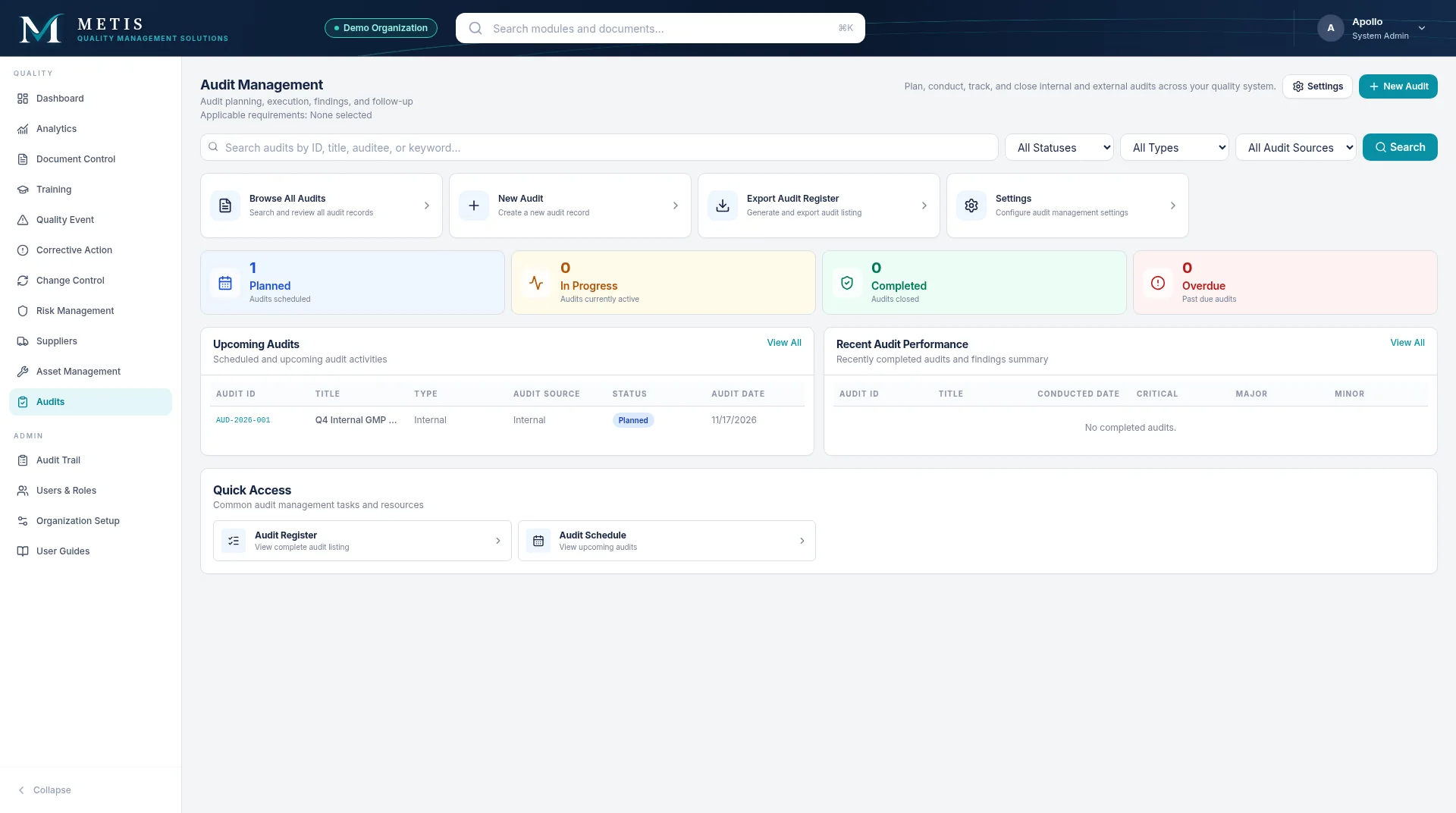
Use Audit Management to organize audit plans, scope, findings, and follow-up. Where an issue needs systemic action, Corrective Actions supports investigation, root cause analysis, action ownership, and effectiveness verification. Reviewing whether actions worked is more useful than closing a finding solely because a task was completed.
Explore Corrective Actions →
Keep risk and supplier oversight in the quality conversation
Risk Management provides a place to record assessments, controls, and residual risk. Supplier Management organizes qualification and performance information. Use these records alongside process results and audit findings to inform management review and continual improvement, with evaluation criteria appropriate to your organization.
Explore Supplier Management →